We recently brought together financial service providers (FSPs) to explore ways to turn data into action and create better outcomes for SMEs, lenders and the wider economy.
Set among the boats and barges of a riverside pierhouse in London, Lloyds, Barclays, NatWest, British Business Bank, Tide, Santander and Unity Trust Bank came together over lunch to share ideas, challenges and opportunities.

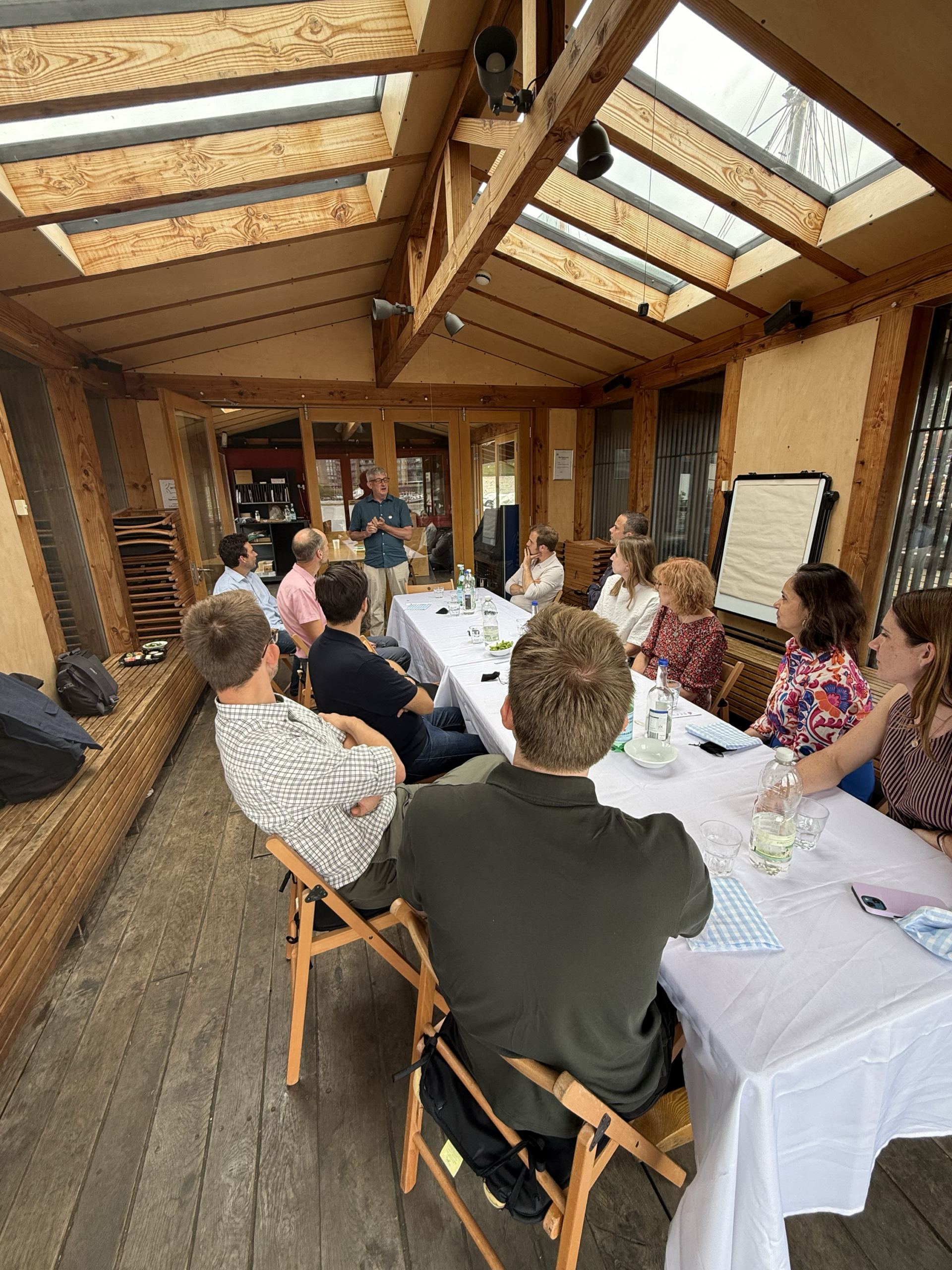

Three themes stood out from the conversation:
1. “Perseus is like open banking for sustainability.”
Open Banking has already delivered an estimated £8.3bn for the UK economy, with the potential opportunity, once it reaches full maturity, estimated at £43bn per year.
Its success has come from giving consumers greater control over their financial data, enabling better financial management, creating productivity gains for businesses and improving access to finance.
The model at the heart of Open Banking is simple: your financial data stays with your bank, while authorised third parties can access it securely through standardised infrastructure.
Perseus follows the same principles.
Sustainability data can remain with the organisation that holds it, whether that’s a utility, data provider, carbon accounting platform or smart meter provider, while authorised organisations can securely access it when they need to.
You don’t need to move all your data to one platform, and you don’t need to build the infrastructure yourself. Perseus provides the shared infrastructure that enables data to flow between organisations, unlocking new products and services and helping to realise its own £5–10bn opportunity in sustainable finance.
The parallels with Open Banking don’t end there. Perseus and Open Banking share many of the same users and stakeholders, and the project is exploring integration with Open Banking to enable greater cross-sector interoperability.
2. “If you're happy for us to access the data, you can use any Carbon Accounting Provider you choose.”
Open Banking doesn’t require everyone to use the same bank. You can bank with whoever you chose and still access third-party financial services.
Perseus works in the same way. It isn’t about choosing one platform or picking a ‘winner’. It’s about interoperability: allowing customers to use different providers while enabling data to flow securely between them.
Perseus demonstrates the value of an interoperable approach to smart data sharing, connecting energy data providers, carbon accounting platforms and financial service providers through common governance.
3. “Collaboration across the sector is the only viable path.”
Collaboration is the business model.
Icebreaker One’s governance structure is designed to enable that collaboration. It gives members the opportunity to shape how Perseus is built and who it benefits.
By bringing members together through Advisory Groups, Steering Groups and an independent Delivery Oversight Committee, Perseus creates a collaborative, and precompetitive environment, all crucial elements to help develop the UK’s first cross-sector Smart Data Scheme.
The alternative is individual organisations building proprietary approaches and contributing to the creation of a fragmented ecosystem. Instead, Perseus provides shared infrastructure that gives FSPs the opportunity to experiment, innovate and develop new services, while reducing duplicated effort.