Build confidence in your data for both customers and investors
When people can find and use your data, understand it and rely on it, it stops being a compliance task and starts shaping decisions and impact. Assured Open Data criteria with clear metadata, provenance, licensing, accessible formats and predictable updates, makes this possible.
Data is infrastructure
Infrastructure helps us connect us when we align on the same designs, specifications and standards. Coherent and compliant infrastructure is trusted by users because it is consistently available, inspected and certified, with clear ownership and rules for upkeep, not just construction.
While digital infrastructure helps move bits around in consistent ways, our data infrastructure helps harmonise on rights.
To build trust with your data’s users, it needs to be governed, structured and made safe to share. This is also now a fundamental in the age of AI.
Assured Open Data provides a coherent, credible way to show that your data is ready for operational use: data where the ‘bits know their rights’ and you build confidence in the web of open data. IB1 operates this on behalf of its members, for the benefit of everyone.
Open data creates value when people can trust it enough to use it continuously and consistently, manage and mitigate risk. Assured Open Data helps make clear the terms of that trust between you and your users.
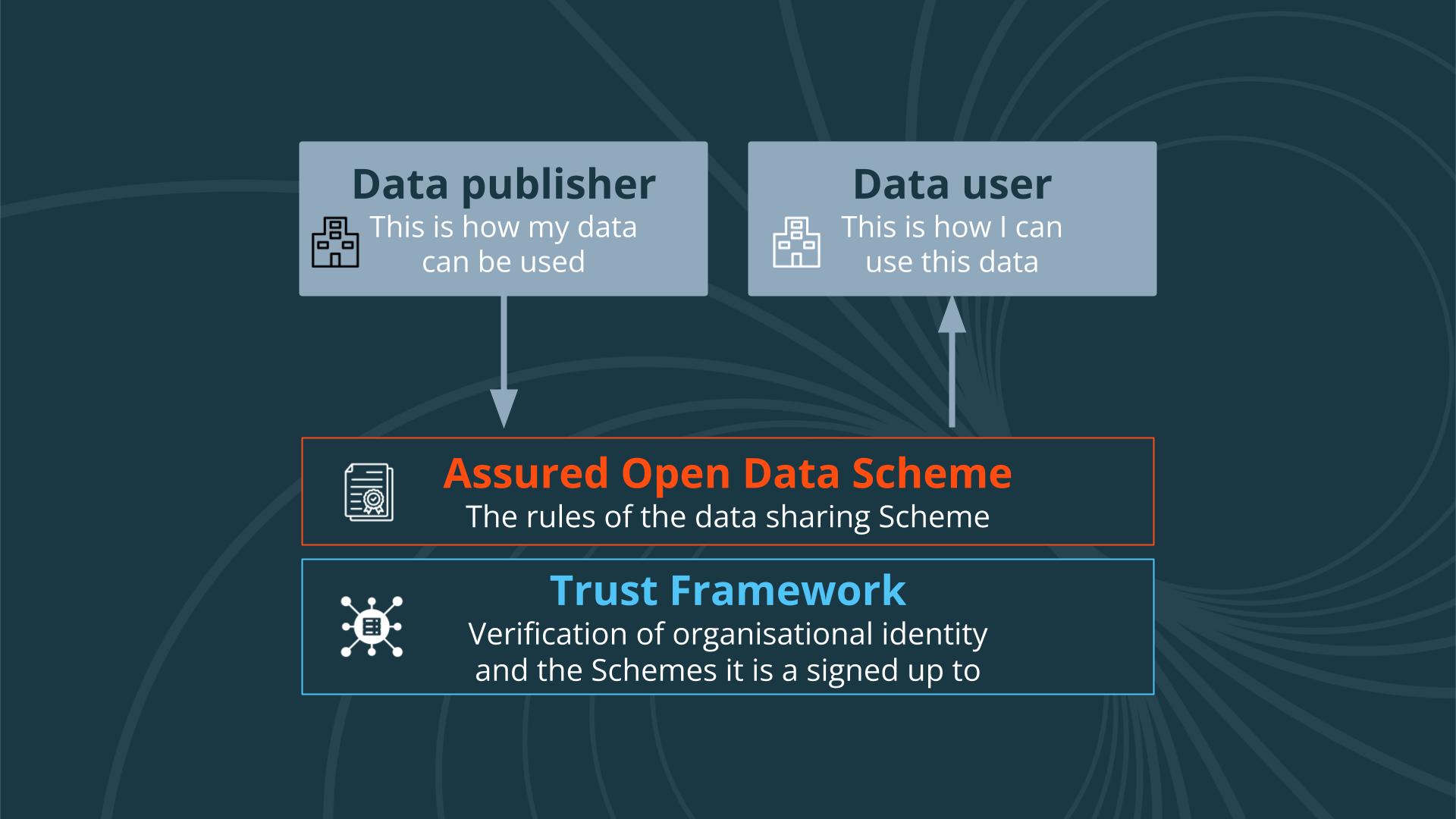
Everything published using the AOD Scheme must carry a clear open licence. Users must respect these license conditions (e.g. attribution).
Only verified organisations can publish under the Scheme: Members sign-up to common rules on process (e.g. security, monitoring) as set out in the Scheme policies. Those rules are held in the Registry and evolve based on market needs through IB1’s open governance processes. This means requirements keep pace with regulation and/or market needs incrementally, without renegotiating contractual terms at every change.
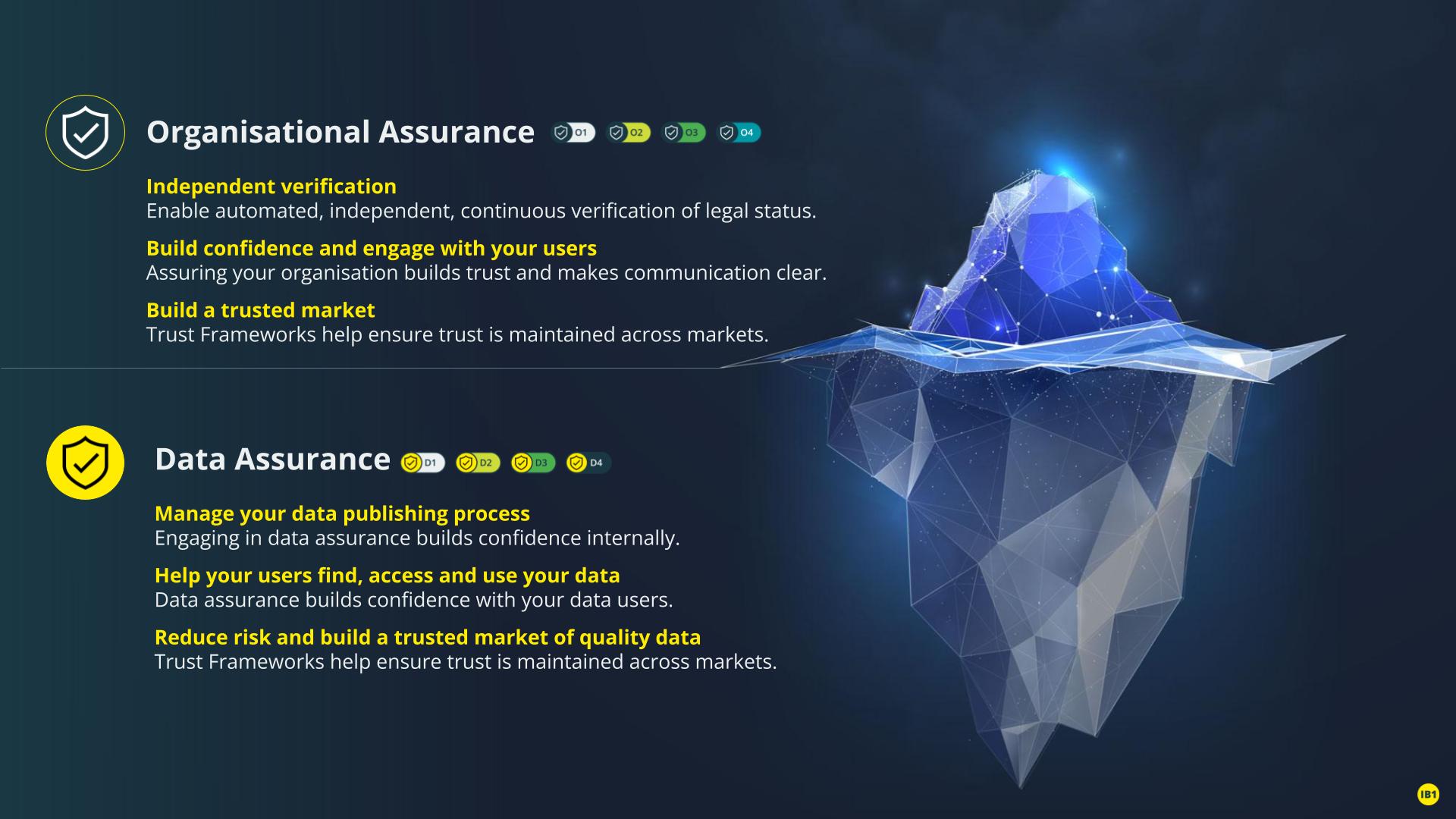
Based on its member’s needs, IB1 assurance has four levels. Level 1 sets the minimum requirements to join a Scheme, Level 4 is a detailed commitment to quality, transparency and responsiveness.
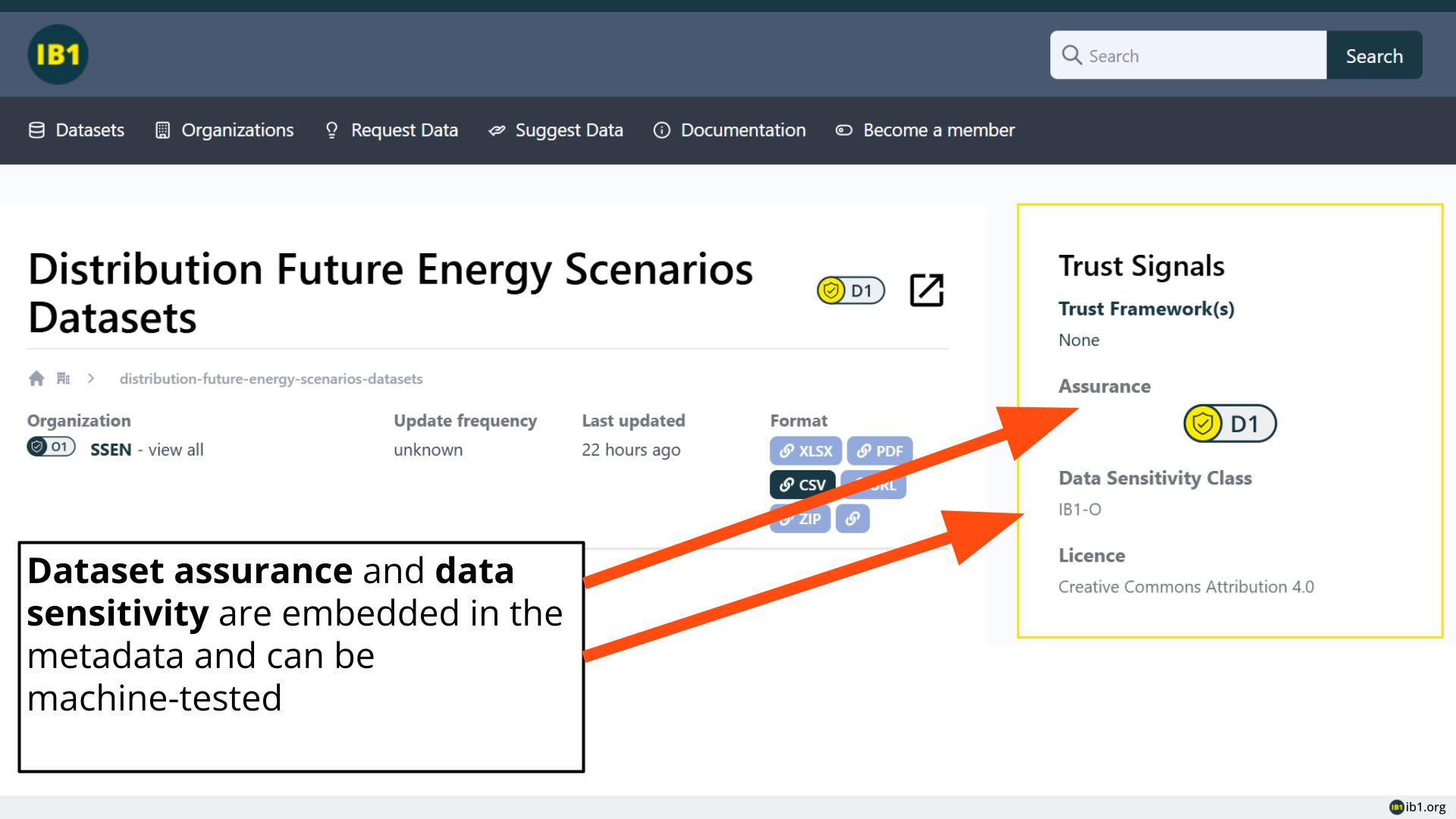
Your assurance is shown through both machine-readable records and human-readable badges, so you and your users can verify its status. You can move up the levels as your publishing practice develops: it is an assurability pathway that enables you to present assured data to your users.
Users can see how you meet legal, liability, technical and governance requirements.
The screenshots below show how SSEN implemented AOD in their own data portal and, because it is machine-readable, these signals can be represented in other catalogues such as IB1’s Open Energy data catalogue services. Read more about the SSEN story.
As SSEN DSO Performance Submission 2026 states: “We continue to work with Icebreaker One, the industry standard for data assurance. This year, 50% of our datasets achieved Level 1 assurance, independently validating data quality, governance and transparency.”
Organisations across sectors are being asked to publish more open data. For example, in the energy sector, DNOs have obligations under ED3, and code bodies and market operators are also working through Ofgem’s Data Best Practice Guidance (DBPG) and the ENA Data Triage and Metadata Management Playbook. Similarly, in the water sector, Ofwat has supported STREAM: an industry-wide initiative for open data sharing.
While the starting principles for data sharing have been set, they are also evolving in response to both new opportunities and new threats. IB1’s governance and process around AOD ensure that any changes in implementation can be delivered in a consistent way, that others can verify.
The AOD Scheme is a founding component that supports NOVA: a Networked, Open, Verifiable Architecture for a trusted data-enabled economy.
For data publishers AOD supports best practices and compliance. Designed with legal and regulatory requirements in mind, it helps participating organisations meet obligations related to Regulatory, GDPR, ICO, UK Data Act, and industry initiatives (e.g. addressing expectations within Ofgem’s best practice guidance, and the ENA open data triage process).
The AOD Scheme reduces risks for data users by providing provenance, licensing and assurance that lets them know your data is fit for purpose.
We can provide a Data Publishing Maturity Assessment (DPMA) to review your current business practices against a proven methodology, surface actionable gaps and make recommendations before regulators or stakeholders do.
“The DPMA work conducted by IB1 has helped NGED to identify opportunities to improve confidence in our data and to provide clarity to improve stakeholder experience when accessing our data resources” – Jay Chen, Data Governance Analyst, NGED